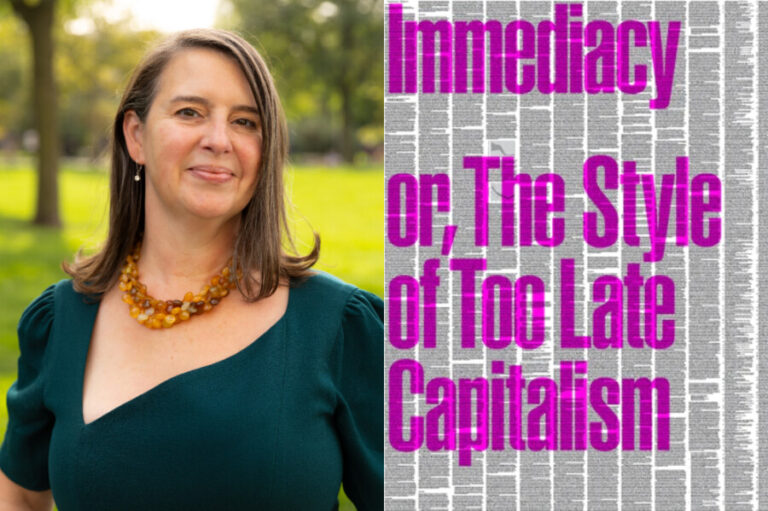
In our ongoing series exploring where we are now in the art world—and where we’re headed—we continue the conversation with a focus on the movement of Immediacy.
Building on our initial reflections, today we dive deeper into how this movement is shaping contemporary artistic practices.
In today’s culture of on-demand gratification, the concept of Immediacy is reshaping the way art is made, consumed, and understood.
According to Anna Kornbluh, immediacy reflects a widespread cultural shift toward the removal of mediation—meaning the social, intellectual, and aesthetic processes that once gave art its depth. Instead of inviting contemplation or layered interpretation, much of today’s art and media aims to be instantly accessible, emotionally direct, and consumable in one rapid glance.
“There’s something dulling and deadening about instant fulfillment… Immediacy gives us art that’s full and flat at the same time—effulgent, but collapsed, too close to us to challenge or transform.” – Anna Kornbluh
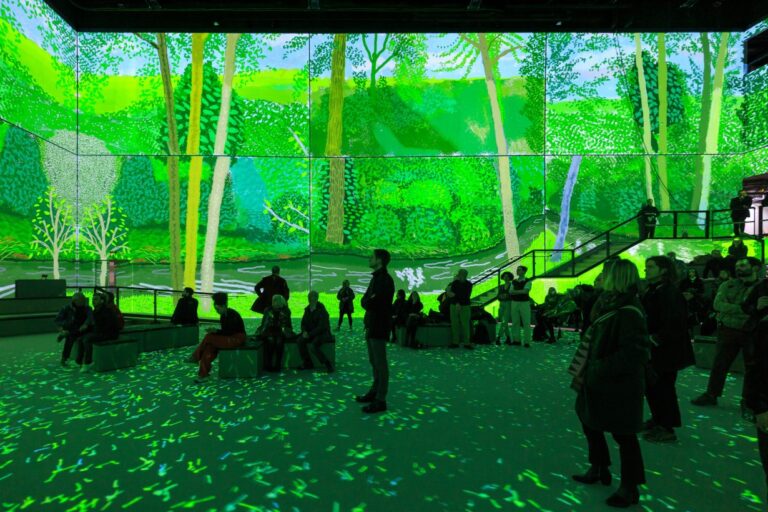
David Hockney, Bigger & Closer, 2023 pictured above
This shift is visible across creative industries: from streaming platforms producing formulaic, fast-paced content designed for mobile viewing, to immersive exhibitions that prioritize sensory experience over critical engagement.
Immediacy has created a culture where nuance is flattened, affect is heightened, and spectacle replaces substance. Kornbluh argues that this isn’t just a stylistic trend—it’s symptomatic of the economic and psychological structures of “too late capitalism,” where instant access conceals both ecological cost and labor exploitation.
Ultimately, Immediacy challenges traditional roles of art as a site for discomfort, reflection, and complexity. In doing so, it raises important questions: Can art still resist or critique when it’s expected to deliver immediate meaning? And what happens to culture when both producers and audiences are caught in the loop of instant, unfulfilled desire?
Looking ahead, Kornbluh suggests that the only meaningful response to the crises that immediacy conceals—ecological devastation, labor exploitation, and political fragmentation—is a return to mediation. This might take the form of unionized cultural labor, collective theoretical work, or simply slowing down and re-engaging with complexity. She underscores that the desire for instant clarity, seamless experience, and perfect alignment in all things—from art to politics—is itself a symptom of this moment. To move forward, we must reclaim friction, uncertainty, and shared struggle.
If you would like to read more, here is a link to a podcast about Immediacy and more of Kornbluh’s thoughts!