Today’s entry in “What Is Performance Art” is all about the drastic lengths artists have taken for their belief in their work…
The exploration of risk and danger in performance art serves as a critical lens through which we can examine the boundaries of human experience and the ethics of artistic expression. Historically, artists have incorporated elements of peril into their works to confront, and often transcend, the conventional limits of physical and psychological endurance. This tradition, burgeoning significantly in the 1970s, challenged the audience’s perceptions and expectations by placing the artist’s body at the center of the experience, often at substantial personal risk. Such performances provoke a visceral reaction that is both immediate and profound, engaging the viewer in a dialogue about vulnerability, trust, and the human condition.
The element of danger in performance art also raises pivotal questions about the role of the spectator and the societal implications of witnessing such acts. As artists willingly navigate the interstices of safety and peril, they redefine the spaces in which art can occur and the relationships it can foster between individuals and communities. These performances, inherently ephemeral and unpredictable, demand an ethical engagement from their audiences, who are transformed from passive observers into active, often unwilling participants in the unfolding drama. The stakes are high, as each performance can never be replicated, and the outcome can never be fully controlled.
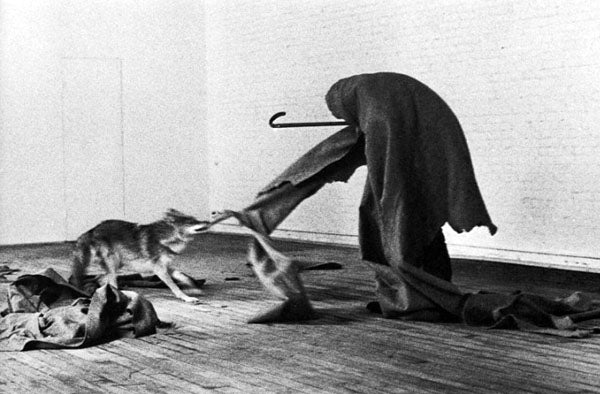
Joseph Beuys’s 1974 performance, I Like America and America Likes Me, involved spending three days in a room with a wild coyote, with only a felt blanket and a shepherd’s staff. This iconic action took place in a New York gallery, where Beuys, wrapped in felt, cohabited with the coyote, engaging in a series of symbolic gestures such as offering it the felt and attempting to tame it. The performance reflected Beuys’s deep interest in American political issues and the healing potential of art. The danger inherent in his interaction with a wild animal served to break down the usual artist-audience divide, replacing it with a compelling, unpredictable exchange that questioned notions of civilization and wildness, domestication, and freedom. You can watch part of the performance here: https://www.youtube.com/watch?v=r9NWCOF0c5M
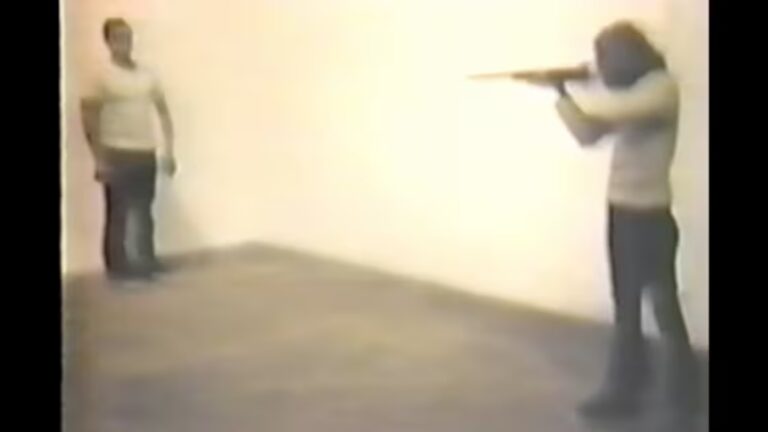
Chris Burden’s 1971 performance “Shoot” epitomizes the use of personal danger as an artistic medium. In this controversial piece, Burden arranged to have himself shot in the arm by an assistant from a distance of about 15 feet with a .22 rifle. The performance starkly highlighted the themes of suffering, sacrifice, and the body as a site of social commentary. It also confronted the audience with the reality of violence and the physicality of pain, challenging them to reflect on their roles as complicit spectators in a society habituated to the spectacle of violence. Burden’s performance remains one of the most extreme examples of the use of danger to achieve artistic ends, pushing the viewer to question the limits of art and the responsibility of witnessing.
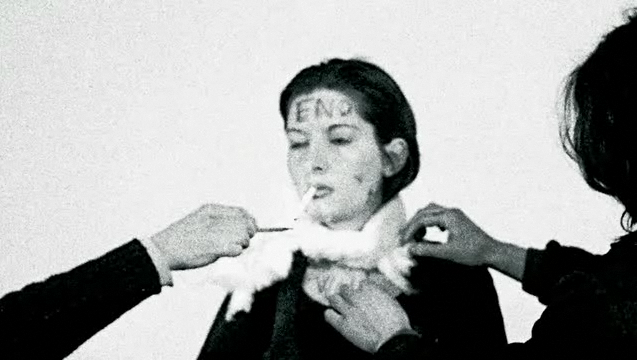
Marina Abramović’s 1974 work “Rhythm 0” was a powerful exploration of the dynamics of power, control, and vulnerability. In this six-hour performance piece, Abramović stood still while the audience was invited to use any of 72 objects on her body in any way they wished, demonstrating how quickly people could escalate to violence when permitted by the context of ‘art.’ The items ranged from feathers and perfume to a gun and a single bullet. Abramović’s passive role subjected her to the whims and often aggressive impulses of the audience, revealing unsettling truths about human nature and the thin veneer of societal norms. “Rhythm 0” not only tested the limits of the artist but also implicated the audience in a disturbing drama of potential harm and psychological trauma.
As Abramović described it later: “What I learned was that … if you leave it up to the audience, they can kill you … I felt really violated: they cut up my clothes, stuck rose thorns in my stomach, one person aimed the gun at my head, and another took it away. It created an aggressive atmosphere. After exactly 6 hours, as planned, I stood up and started walking toward the audience. Everyone ran away, to escape an actual confrontation.”
These performances remind us of the potent force of art to confront and disrupt, compelling us to ponder the profound connections and ethical responsibilities we share. It’s important to remember that while some pieces might engage with themes of extremity or explore the idea of danger, they are crafted with deep intentionality and purpose. These performances are designed to provoke thought and stir emotions in as controlled an environment as possible.