Did Politics Change Contemporary Art?

I recently read a polarizing essay by critic Dean Kissick that’s been stirring up big conversations in the art world. The question he asks is simple but tricky:

Did politics change contemporary art?

Kissick points to exhibitions like the Barbican’s Unravel, the Venice Biennale, and the Whitney—shows that often lean hard on identity and worthy causes. Yet too often, he says, they leave us with art that feels safe, careful, and overly explained. Promising revolution, they deliver polite gestures instead.

Take a giant mural from a women’s group in Bangalore—it’s dazzling, but by focusing so firmly on identity, it starts to feel like it’s performing approval rather than sparking a new way of seeing.

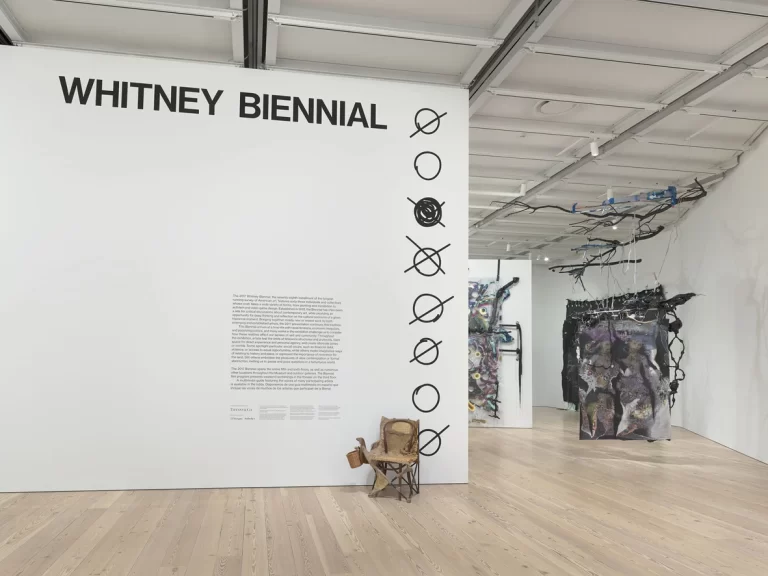
Whitney Biennial 2024. Many works centered on social justice themes, like archival research projects or installation-based essays, often praised more for their intent than their visual experience.

He compares this to the art world of the 1990s and early 2000s—a time when artists staged puppet operas about the Crusades, built floating cities in virtual reality, choreographed fireworks across the Beijing sky, even fed hallucinogenic mushrooms to reindeer in Berlin museums.

It was a time when biennials and fairs thrived on “the international trade of ideas and commodities,” and artists acted as researchers with no pressure to land coherent conclusions. They were free to revel in experimentation.

Back then, art didn’t have to stand for something. It was free to be strange, ecstatic, even a little unhinged.

“Art is often best when it’s absolutely deranged. We are irrational, incoherent beings, and artists and writers should embrace this once more. ” – Dean Kissick

And honestly, I agree.

These exhibitions today often seem to reward artists more for their political messaging than for the formal content of their work.

I want art that startles me. Art that opens doors to new worlds, that makes my pulse quicken. Art that leaves us reeling, instead of politely nodding at another “politically conscious” installation with 400 words of wall text.

Kissick does point to moments of real wonder he’s seen recently: pipe organs filling Italian pavilions with eerie music, Amazonian myths erupting across canvas, and forests of color and fantasy that felt alive again.

I miss the art that didn’t try so hard to say the right thing.

I miss the art that scared me, confused me, or made me gasp.

Because art doesn’t need to save the world —
it just needs to make it shimmer, crack, or collapse for a moment.

What do you think?

Are you hungry for art that takes more risks, that aims for awe over explanation?

I know I am.

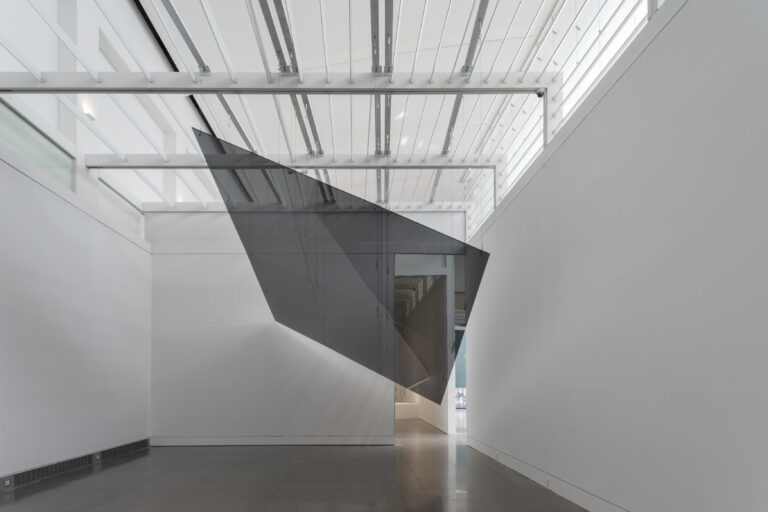
un- (anterior ellipse[s] as mangled container; or where edges meet to wedge and [un]moor) by Charisse Pearlina Weston which evokes “the ‘stall-in’ planned by the Brooklyn and Bronx branches of the Congress of Racial Equality to protest the 1964–65 New York World’s Fair” and explores “tactics of Black refusal.”

Curious to dive in yourself? Click below to read Dean Kissick’s full article

Would you like to have our newsletter sent straight to your inbox? Sign up below!

Leave a Reply

Your email address will not be published. Required fields are marked *